Free tool
Red light therapy schedule builder
Pick a goal, a device and the days you can keep. Get a four-week calendar with minutes per session, the frequency the trials used, and a short list of what to log so you can judge it honestly at the end.
Why four weeks
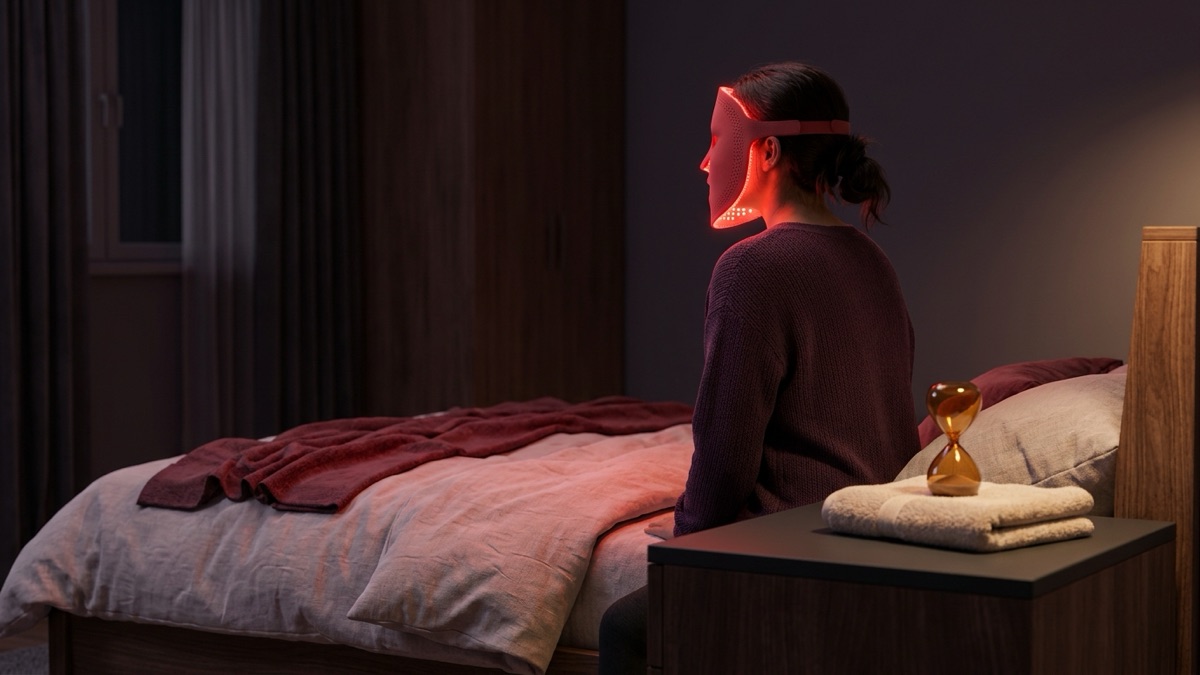
Almost nothing in red light therapy shows up in a week. The skin trials ran four to fifteen weeks, the hair trials sixteen to twenty-six, and the pain trials measured at the end of several weeks of treatment and again weeks later. Four weeks is the shortest block that tells you anything: long enough for texture or stiffness to shift if it is going to, short enough to commit to without a leap of faith. At the end, you compare photos or scores and decide whether to run another block.
How often the trials used light
| Goal | Sessions a week in trials and maker guidance | How long |
|---|---|---|
| Skin | 2 a week in the two largest trials; one mask maker recommends 3 to 5 | 4 weeks (wrinkle trial) to 30 sessions (collagen trial) |
| Hair | 3 a week (comb trials) or every other day (helmet trial) | 16 to 26 weeks |
| Pain and joints | Varied by trial; one panel maker suggests 3 to 5 | 4 to 8 weeks, then reassess |
| Recovery | Paired with training days; maker guidance of 3 to 5 | Tie to training weeks |
| Sleep | Every night in the one trial | 14 nights |
More is not better. The dose response is biphasic, which means stacking sessions can blunt the effect, and the trials that worked were consistent rather than heroic. If you can only manage two days a week, two days every week beats five days for one week and nothing after.
How to use the schedule
- Pick the goal first. It sets the frequency range and the default minutes.
- Pick your device. A mask and a panel differ in minutes because they differ in irradiance; check the dose with the dose calculator if you have a spec sheet.
- Tick the days you can really do. Sessions at the same time of day, attached to a habit you already have (after brushing your teeth, before a shower), survive week three.
- Print it, or screenshot it. Put it where the device lives.
- Log every session with the items the builder lists, and take the week 0 photos before the first session.
Heads up
Never stare into LEDs or laser diodes, wear the goggles that come with a high-power panel, and keep the device off broken skin. Talk to a doctor before you start if you are pregnant, have epilepsy, an active cancer, a photosensitive condition, or take medication that makes skin sensitive to light. A symptom that is getting worse needs a diagnosis, not a longer session.
What the builder does not do
It does not know your device's irradiance, so it cannot confirm that your minutes deliver a dose in range: that is the calculator's job. It does not promise a result by week four; it gives you the fairest test the evidence supports. And it schedules only what you tick, so if a goal's trials used three sessions a week and you tick one, it tells you so rather than quietly inventing a protocol.
Where these numbers come from
The skin frequencies come from the Lee 2007 split-face trial (twice a week for four weeks) and the Wunsch and Matuschka 2014 trial (twice a week, 30 treatments), plus one mask maker's public guidance of 3 to 5 sessions a week for 4 to 6 weeks. Hair comes from the Jimenez 2014 comb trials (three times a week for 26 weeks) and the Lanzafame 2013 helmet trial (25 minutes every other day for 16 weeks). Sleep comes from the Zhao 2012 trial (30 minutes nightly for 14 nights). Pain and recovery lean on one panel maker's guidance (10 to 20 minutes per area, 3 to 5 times a week) because the knee trials used lasers dosed per point. Every source is linked inside the tool.
Questions
How many times a week should I do red light therapy?
Most skin trials used two to five sessions a week, the hair trials used three a week or every other day, and one sleep trial used light every night for two weeks. Three to five sessions a week covers most goals; the builder flags fewer or more than the trials used.
How long should each red light therapy session be?
It depends on your device's irradiance. A 30 mW/cm2 mask reaches about 18 J/cm2 in 10 minutes; a panel at 6 to 12 inches usually needs 10 to 20 minutes per area; the hair helmet trial used 25 minute sessions. The builder sets a default per goal and device, and the dose calculator checks it against your spec sheet.
When should I expect to see a change?
The trials that found changes ran four to fifteen weeks for skin, sixteen to twenty-six weeks for hair, and several weeks for pain. Four weeks is the shortest honest test, and many goals need more than one four-week block.
Is it better to do red light therapy in the morning or at night?
There is no good trial comparing the two for skin or hair. The one sleep trial used light in the evening. Pick the time you can keep every week; consistency matters more than the clock.
Can I print the schedule?
Yes. The Print button lays the four-week calendar, the minutes and the logging list out on one page without the rest of the site.